Noravank & Gnishik Canyon Adventure
- 1 Day
- Offroad
Contact for details
Journey to the magnificent Noravank monastery complex, a spiritual and architectural treasure founded in the early 13th century. This sacred site served as the spiritual, educational, and cultural heart of Syunik, while also serving as the ancestral burial ground of the noble Orbelian dynasty. From this stunning monument, your adventure continues into one of Armenia's most breathtaking natural wonders — Gnishik Canyon. This dramatic gorge lies within the protected Arpa landscape, a biodiversity hotspot harboring nearly 900 plant species and over 500 animal species. Among the canyon's most prized inhabitants is the majestic bezoar mountain goat, an indigenous wild goat species that has roamed these highlands for millennia. With luck and patience, you may witness these elusive and graceful creatures navigating the steep canyon walls during your exploration. The canyon track is narrow in places, which is exactly why a professional driver takes it in the 4x4 while you simply watch the red cliffs go past, and a professional guide is with the group at the monastery and in the gorge — so you can enjoy the drama of the landscape without having to negotiate it yourself.
Travel Plan
Start Point: Yerevan
Noravank Monastery
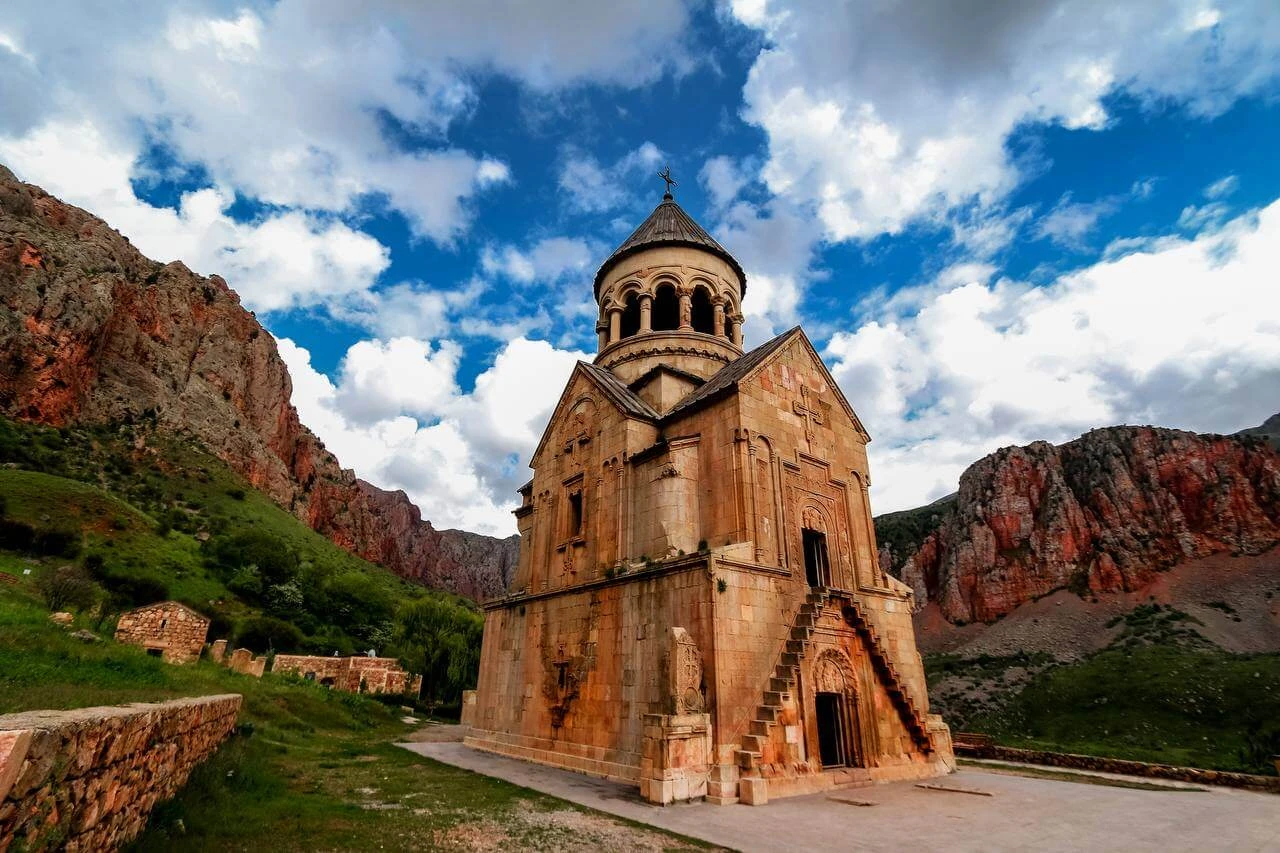
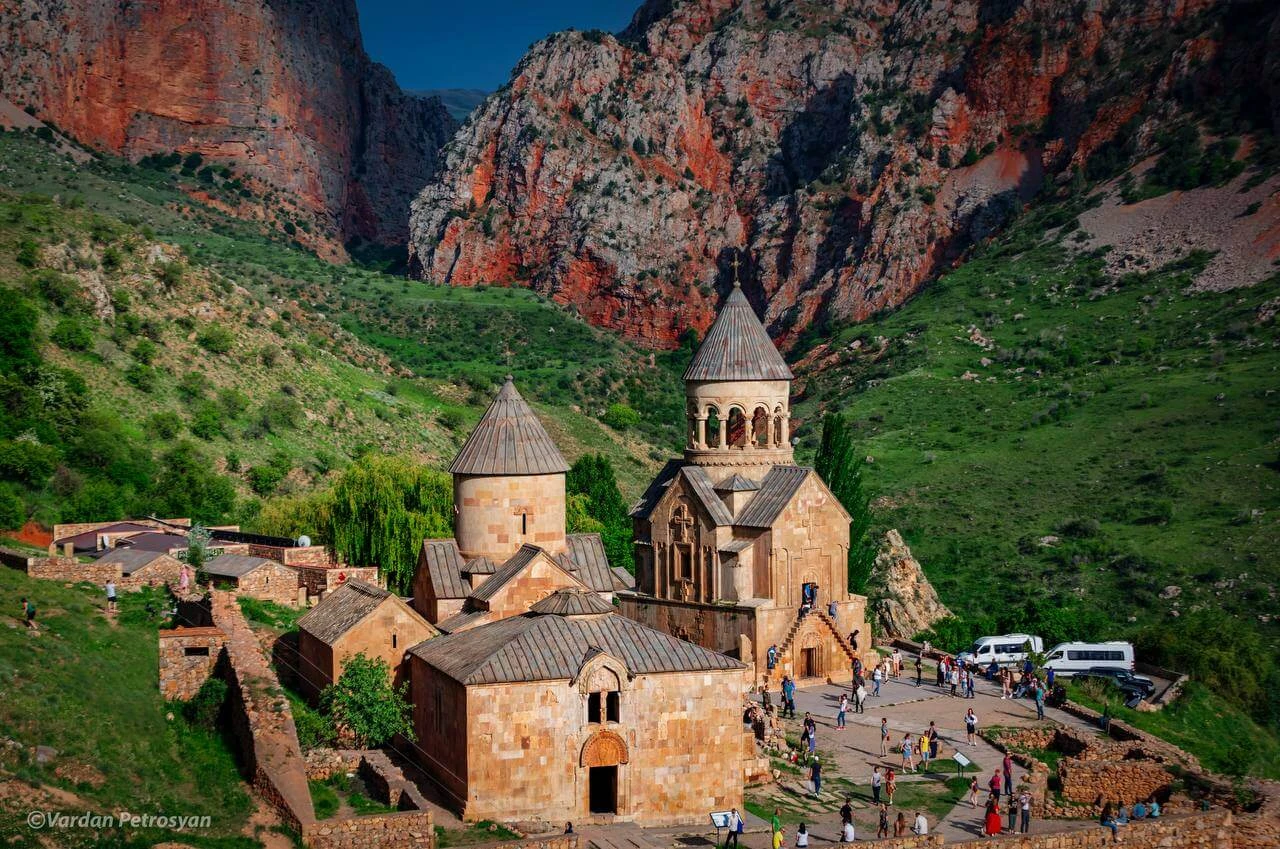
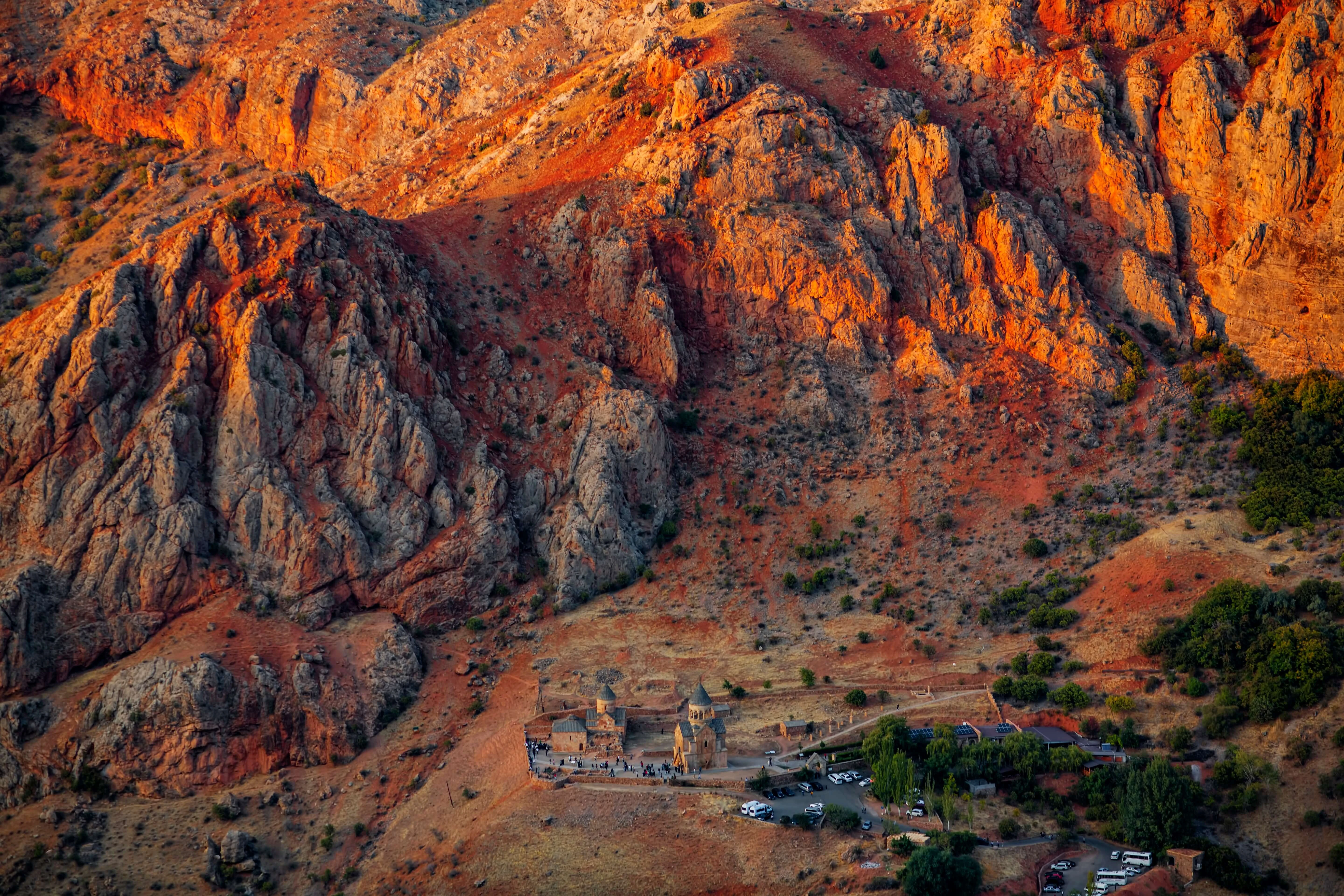
Noravank stands as one of medieval Armenia's most significant cultural and religious centers, dramatically positioned in the Vayots Dzor region within a narrow gorge carved by the Arpa River and embraced by towering red cliffs. This architectural masterpiece comprises three remarkable churches: the Church of St. Karapet (1216-1221), the Church of St. Gregory (1275) in the northern section, and the stunning Church of the Holy Mother of God (1339) standing proudly in the eastern part. The latter is particularly extraordinary, featuring a unique narrow pyramid-shaped external staircase ascending to its second floor — a daring architectural feat that remains iconic to this day. Surrounded by dramatic russet cliffs that glow magnificently at sunset, Noravank flourished during the Middle Ages as an important center of learning, theology, and manuscript illumination, leaving an indelible mark on Armenian cultural heritage.
Gnishik Canyon
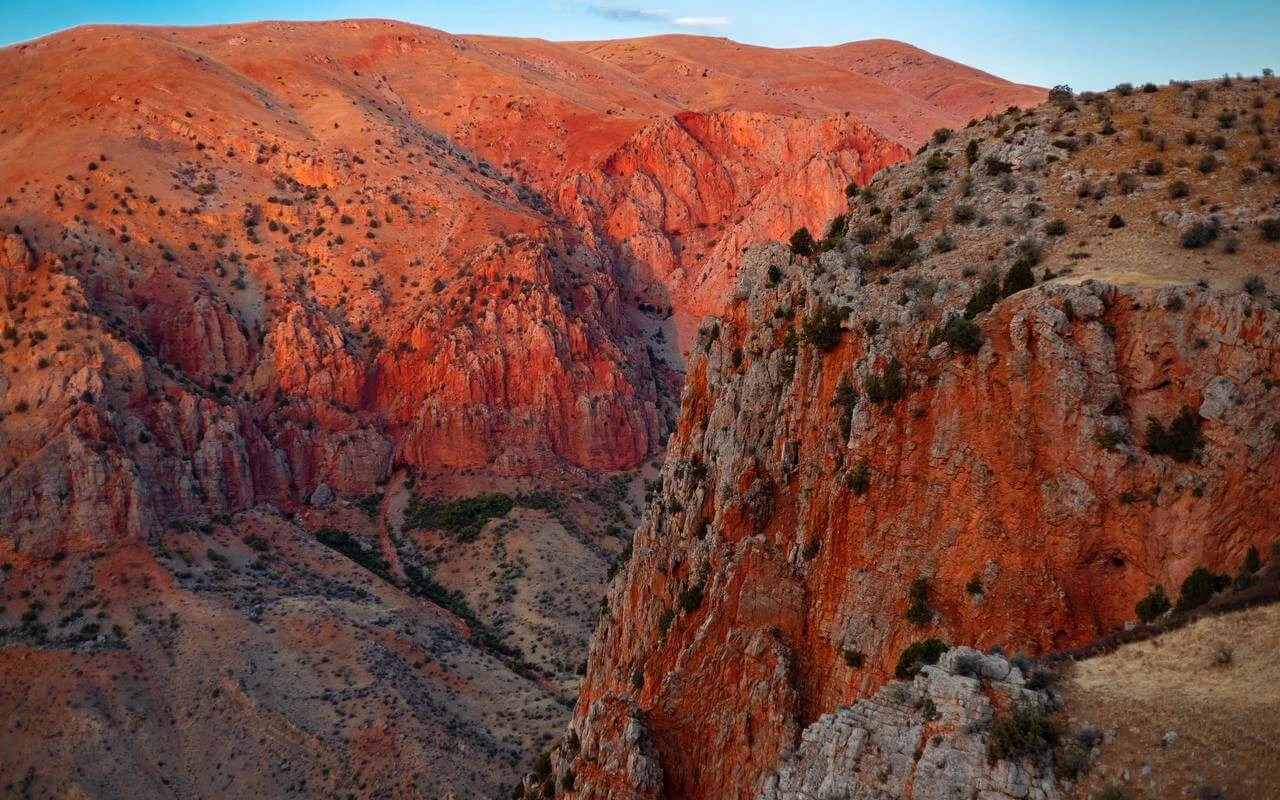
Gnishik Canyon unfolds in the Vayots Dzor region, immediately adjacent to Noravank monastery — so close that it's often called Noravank Gorge. This spectacular natural corridor leads visitors to the monastery through a maze of volcanic rock formations sculpted by ancient geological forces. The canyon's walls are punctuated by mysterious caves waiting to be discovered. After heavy rains, the canyon transforms dramatically as water cascades from the rock faces, creating ephemeral waterfalls that enhance the gorge's raw beauty. On sunny days, the interplay of light and shadow across rocks and cave entrances creates a mesmerizing visual symphony, rendering the canyon almost indescribably beautiful. As part of the protected Arpa landscape, Gnishik Canyon serves as a vital sanctuary for nearly 900 plant species and more than 500 animal species, including the magnificent bezoar mountain goat — a living symbol of Armenia's wild heritage.
End Point: Yerevan
What's Included
- Professional guide
- Professional driver
- 4x4 off-road vehicle
- Bottled water
- Drone photography
- Wine, coffee, gata
What's Not Included
- Lunch and dinner
- Personal expenses
- Entrance fees
- Masterclass/Degustation
Frequently Asked Questions
- How long is the tour and where does it start? It is a full-day off-road private tour from Yerevan to Noravank Monastery and the dramatic Gnishik Canyon in the Vayots Dzor region.
- What are the highlights? The early-13th-century Noravank complex with its iconic two-story Church of the Holy Mother of God and narrow external staircase, and Gnishik Canyon — part of the protected Arpa landscape, home to nearly 900 plant and over 500 animal species.
- Might we see wildlife? Possibly. The canyon is a sanctuary for the indigenous bezoar mountain goat; with luck and patience you may spot these graceful animals on the steep canyon walls.
- Is this a 4x4 tour? Yes. A 4x4 off-road vehicle takes you through the canyon and rock formations, off the standard routes.
- What is included in the price? A professional guide, a professional driver, a 4x4 off-road vehicle, bottled water, drone photography, and wine, coffee, and gata. Lunch, dinner, entrance fees, and any masterclass/degustation are not included.
- The canyon looks steep — is it manageable for a nervous passenger? For most people, yes. The narrow canyon road is driven by a professional driver in a 4x4 built for it, you are never asked to drive or scramble, and a professional guide accompanies you throughout.
- When is Noravank most beautiful? At sunset, when the surrounding red cliffs glow — though the tour is scenic year-round.
- Is it a private tour? Yes, run exclusively for your group.